

If you think data breaches are slowing down, you might be dangerously wrong. The fact is that they’re getting worse, more expensive, and increasingly complex. For law firms and legal service providers handling sensitive client information daily, the question isn’t if you’ll face a cyber incident; it’s how prepared you’ll be when it hits.
Here’s the thing: when a breach happens, someone needs to preserve evidence, manage litigation holds, coordinate with outside counsel, handle regulatory notifications, and somehow keep the entire operation from imploding. That’s where incident response teams come in and why understanding their structure matters for anyone in legal operations.
An incident response team could be considered like an emergency group in your organization in respect to digital disasters. When there’s an incident like a ransomware attack, breach, insider threat, or system compromise, this group springs into action.
However, what makes them different from other IT help desks is that they deal with more than one side of a complex crisis. These people are crucial in law firms and legal processing organizations dealing with clients’ sensitive information. If something goes wrong in one case file, it means malpractice lawsuits and lost business overnight.
The team typically includes members from IT, legal, communications, HR, and executive leadership. Each person brings specific expertise to handle different aspects of the incident. And yes, legal needs a seat at this table from day one, not three days later when someone finally realizes they should probably loop in counsel.
Detect and Identify Threats: They monitor systems to spot unusual activity and determine whether it poses a real threat or is a false alarm. Quick detection means less damage.
Contain the Incident: Once a threat is confirmed, they work to isolate affected systems to prevent the breach from spreading to other parts of the network.
Investigate and Analyze: The team digs into what happened, how it happened, and what data or systems were compromised. This investigation drives everything that comes next.
Coordinate Legal and Regulatory Response: They work with legal teams to manage notification requirements, litigation holds, and evidence preservation for potential lawsuits.
Execute Recovery Plans: After containment, they restore systems and data from clean backups while ensuring the threat has been completely eliminated.
Document Everything – From the first alert to final resolution, every action gets documented. This documentation becomes critical for legal proceedings and regulatory audits.
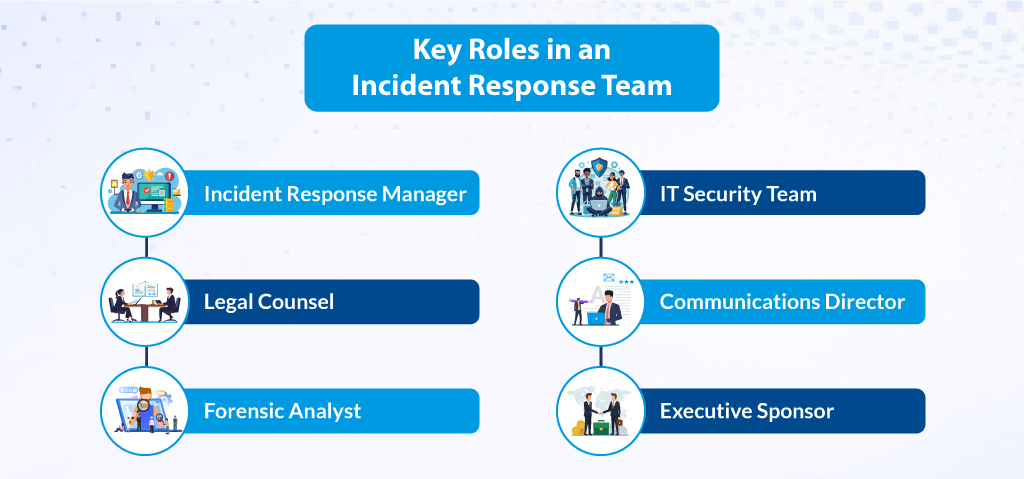
This person runs the show. They direct all activities related to response, make important decisions regarding handling and recovery, and serve as the point of contact during the crisis.
They are calling the shots on when to call in external assistance, when to alert the executives, and how to focus their responses. During an incident, this happens 24/7 until it settles. They also facilitate communication between tech teams and non-tech stakeholders.
They are like air traffic controllers. They themselves do not fly planes but ensure nothing goes wrong.
Legal counsel manages the entire legal dimension of the response. They’re assessing whether notification laws apply, coordinating with external litigation counsel, and ensuring the team properly preserves evidence.
They’re also advising on privilege issues, because not every internal investigation document should be discoverable later. They draft notification letters, work with PR on public statements, and coordinate with insurance carriers on cyber liability coverage.
For law firms and LPOs, this role is doubly critical because you’re managing both your own obligations and potential liability to clients whose data you’re handling. One wrong move in evidence handling can tank an entire case.
These professionals dig deep into what exactly took place. They inspect the event logs, investigate the affected systems, trace the attack path, and gather evidence that will surely stand up to scrutiny in a court of law. They also offer recommendations on the best ways forward.
They are using image tools to protect data, analyzing malicious files, and developing a chronology around the incident. These results inform their technical work and their legal approach as well.
Forensic practitioners must understand the legal requirements for the chain of custody and operate under legal advice to protect privilege. Their reports become crucial evidence in cases.
Their technical responders handle containment, vulnerability remediation, and system remediation. They also work on implementing blocks, taking systems down, restoring credentials, and hunting for further compromises.
They collaborate closely with forensic analysts but are more concerned with halting bleeding than with examining a crime scene. They are also developing plans for the recovery process, including what will be recovered first and what will remain down.
Speed matters here, but so does coordination with legal. Taking a server offline might stop an attack, but it could also destroy evidence if not done properly.
This person manages internal and external messaging. They’re drafting media statements, coordinating client notifications, and keeping employees informed without causing panic.
They work hand in hand with legal counsel to ensure communications don’t create additional liability. Everything they say externally is reviewed because it could later become evidence.
For firms and LPOs, this role includes managing client communications about potential exposure, conversations that require both transparency and careful legal review.
Usually, a C-suite member provides high-level direction and secures resources for the response. They’re making business decisions about spending, engaging outside counsel, and notifying the board.
They’re not in the technical weeds, but they own the business impact. Should we pay the ransom? When do we notify clients? Do we need to bring in a crisis management firm?
This person also manages upward communication to the board and potentially to regulators or law enforcement.
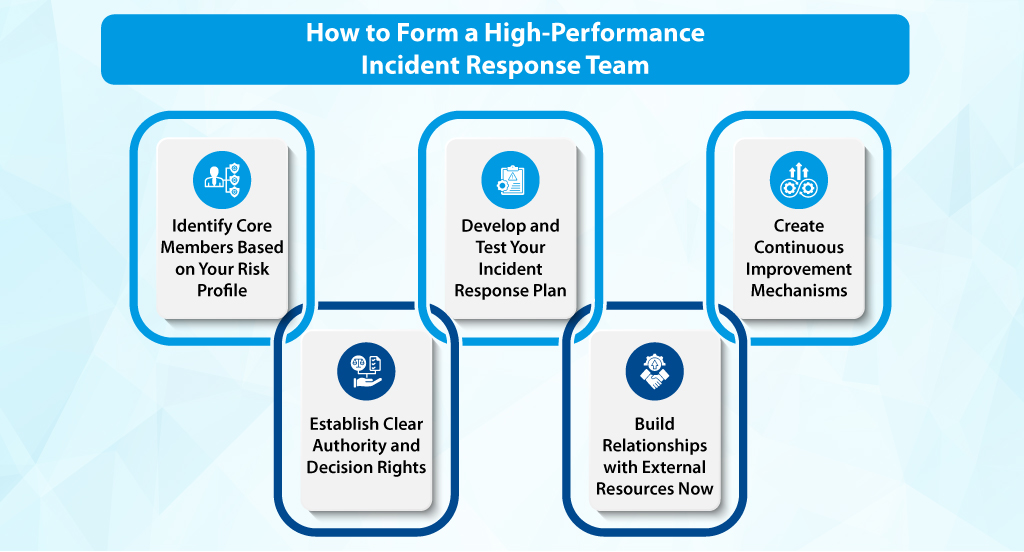
Start by mapping your specific vulnerabilities. Legal organizations face unique threats. Ransomware targeting case management systems, business email compromise aimed at settlement wire transfers, or targeted attacks seeking trade secret litigation materials.
Select team members who understand these legal-specific risks. Your core team should include someone who deeply understands your ethical obligations, not just generic security protocols.
Document who can make what decisions during an incident. Can your IT manager take systems offline without executive approval? Who authorizes client notifications? What spending limits exist for emergency response vendors?
During a crisis, ambiguity causes dangerous delays. Create a decision matrix before an incident occurs, and ensure everyone knows their boundaries and escalation paths.
Write detailed playbooks for likely scenarios, but don’t stop there. Run tabletop exercises quarterly where you simulate incidents and practice your response. Include after-hours scenarios and test your communication channels.
Many plans fail because key personnel can’t access the plan document when systems are down or don’t have current contact information for critical vendors.
Develop relationships in advance of any incident with forensics firms, breach counsel, cyber insurance carriers, and notification vendors by negotiating rates, understanding availability, and vetting their expertise with legal industry clients.
You cannot afford to select vendors or negotiate contracts during an active incident. With relationships in place, response times are faster, and outcomes are better when literally every hour counts.
After each incident or near-incident, conduct a lesson learned activity. What did you do well? What could you have done better? What data or information were you lacking? What decisions would you make differently? Adjust your pandemic planning activity based on these learnings.
Cyber incident response teams aren’t optional anymore; they’re essential infrastructure for any organization handling sensitive data. For legal professionals at firms, LPOs, and legal tech vendors, understanding these teams isn’t just about IT security. It’s about risk management, client protection, and keeping your organization out of courtrooms and regulatory hot water.
The question isn’t whether you’ll face a cyber incident. It’s whether you’ll have the right team ready when it happens.
At Aeren LPO, we understand the intersection of legal operations and cyber incident response. We assist law firms and LPOs with document review, eDiscovery, and litigation support services that involve sophisticated security measures and incident response functions. Our staff functions harmoniously with all of an organization’s incident response functions to ensure continuity during critical incidents.

We use cookies and similar technologies for analytics and personalization. You can accept, reject, or customize your cookie settings at any time.